
Need drywall repair in Toronto? Finest Painters fixes holes, cracks, nail pops, and water damage, then primes and paints for a flawless finish. Get a free quote!
A doorbell knocks against the door frame. A shelf falls down and reveals a line of blemished-looking anchor holes. The bathroom upstairs is leaking and is making a mess on the ceiling. Sound familiar? Problems with drywall damage occur in nearly every home, and when they do, it's usually at the least opportune moment.
Fortunately, just about any damaged wall can appear brand new again! With the proper application, hand, and paint finish, no one will ever know that there was damage. Let's take a look at the basics of professional drywall repair, what you can do to know when it's time to call the experts, and what you can expect from Finest Painters when they arrive to drywall your walls.
Drywall, also called gypsum board, is tough enough for daily life. Over time, though, it takes a beating. Kids, pets, moving day, renovations, and seasonal humidity swings all leave their mark.
It's tempting to hide a hole behind a picture frame and move on. We get it! But small problems rarely stay small. A crack along a seam can grow wider each winter. A soft spot from moisture can hide mold. And an obvious wall hole patch done in a hurry can stand out more than the hole itself once the light hits it.
Fixing damage early keeps costs down and protects your home's value. If you plan to sell, buyers notice dents, cracks, and patchy paint right away. Smooth, freshly painted walls make every room feel cared for.
Every wall tells a story. Here are the problems we're called in to handle most often.
Nail holes, screw holes, and dents from furniture are the most common damages. Any of these smaller than half an inch can be filled with a light spackling compound, sanded, and painted over.
Doorknob punctures, accidental impacts, and holes from old hardware removals fall under this category. The former can be repaired using a self-adhesive mesh patch, while the latter will need a new board installed.
They tend to occur along the seams, above or near doors and windows, and are usually a result of a house settling or drywall contracting due to humidity, which is especially evident in the GTA. Thin cracks will need some mesh applied over them, while longer ones require a joint tape.
These are the little round bumps that form when a nail comes out of the stud. Painting over them will not conceal or fix a nail pop. The repair will require a drywall screw placed a couple of inches away from the popped nail, and then the offending fastener would need to be driven back in. Both holes will then need to be filled.
Stains, blistering, sagging, and soft spots are all tell-tale signs of water damage. The board with damage may have to be cut out and replaced entirely, but it is vital to first ensure that the source of the leak is no longer present and mold is dealt with, if any.
Plenty of homeowners search for how to repair drywall before calling a pro, and that's smart. Knowing the process helps you understand what quality work looks like. Here's how our team approaches every job.
The first step is to examine the entire wall, rather than the hole. Our Painters will observe dents, scuffs, cracks, popping nails, and any moisture issues. Prior to cutting into a wall, we also inspect for wires and pipes. Safety first, always!
The method is dependent on the damage size and cause. In the case of various-sized holes, you can either patch them with drywall compound or fill them with caulk. The short answer to the question, how to patch a hole in drywall, is to use drywall compound or caulk for various-sized holes.
The main cause of cracks and patches that show through paint is using the wrong method.
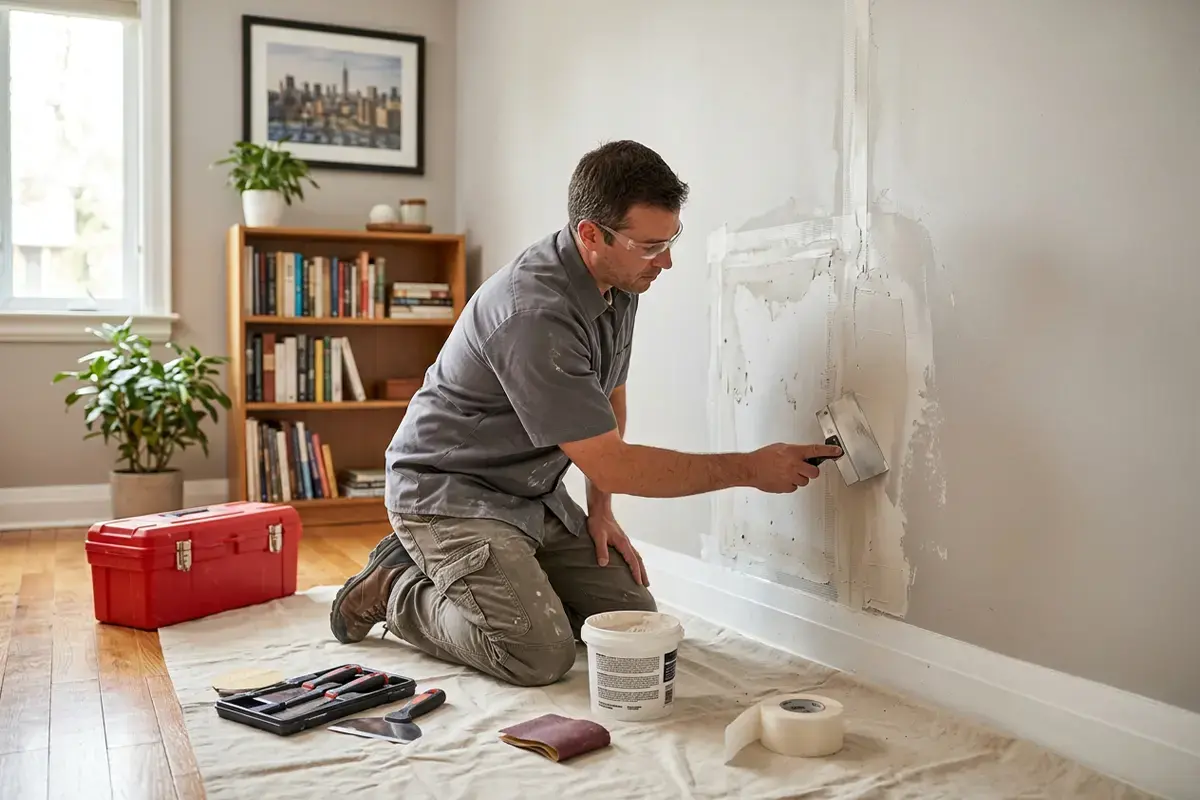
Patience is the key to making good repairing wallboard work. The joint compound is applied in thin applications, and joints are feathered out to match the adjoining wall. Most repairs require 2 to 3 coats (drying time in between). Setting-type compound is a suitable material for deep fills, as it sets with little shrinkage.
Where does a patch cease to be visible? Sanding. Sand between coats and finally sand to smooth until you cannot feel any damage. To minimize dust, we place protective coverings and take extra care to clean up when we work in your home, so that it remains habitable.
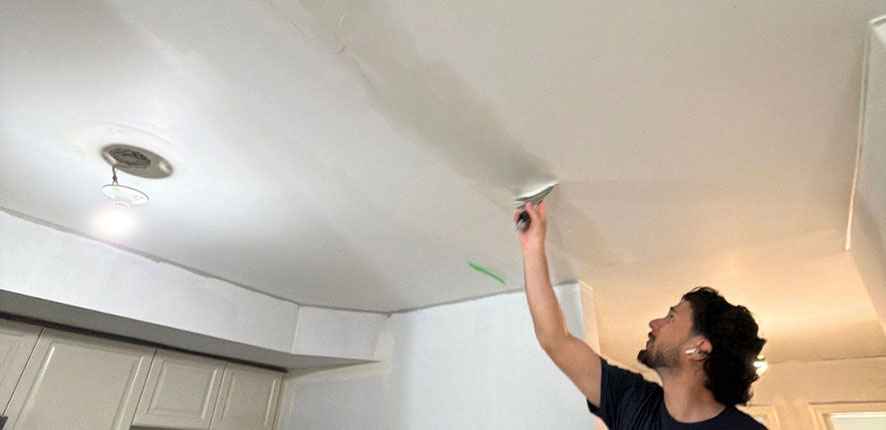
There are many homes that have stipple ceilings or textured walls, particularly older homes. A perfectly flat patch on a textured wall sticks out like a sore thumb! We duplicate the original finish so that the repaired area blends in seamlessly with the surrounding area.
This is a step that is sadly not performed often enough. Fresh compound absorbs paint differently than other areas of the wall. If it is not primed, you will see “flashing” (a dull or shiny spot) that will tell you that it is a patch. A coat of quality drywall primer smooths out the surface and provides an even base.
Finally, we paint! If it is a small area, one could do a touch-up job. Generally, we would suggest painting the entire wall, top to bottom, corner to corner, if there are multiple repairs to one wall, or the sheen is semi-gloss or above. That's the key to a win no one will see.
A drywall repair kit from the hardware store works well for a few nail holes or a small dent. If you're handy and have a free weekend, go for it!
Things change with bigger damage. Learning how to repair drywall hole-in-the-wall situations that involve cutting, framing support, taping, and texture matching takes real skill. A rushed sheetrock repair often leaves raised edges, visible tape lines, or patches that crack within months. Then you're paying twice.
At Finest Painters, drywall work isn't an add-on. It's part of how we deliver beautiful paint jobs. Paint is only as good as the surface underneath it, so we treat surface prep with the same care as the final coat.
Whether it's a condo wall in downtown Toronto, a family room in Mississauga, or a basement in Vaughan, we bring the same attention to detail to every project.
If you've been typing drywall repair near me into your phone and staring at that damaged wall, consider this your sign. Reach out to Finest Painters today for a free estimate. Send us a few photos, tell us what happened, and we'll recommend the right fix. Let's make those walls look amazing again!
Cost depends on the size of the damage, the number of areas, texture matching, and whether painting is included. A few small holes cost far less than replacing a water-damaged ceiling. Contact Finest Painters for a free, accurate quote based on your specific walls.
Small repairs can often be finished in a single visit. Larger patches need time for multiple coats of compound to dry, plus sanding, priming, and painting. Many jobs wrap up in one to two days, depending on the damage and drying conditions.
Yes. We remove the damaged material, install new drywall, finish the seams, and paint to match. Before we start, the source of the leak must be fixed. If there are signs of mold, it should be addressed by a qualified specialist first.
Not always. A small patch can sometimes be touched up. But if there are several patches, or your paint has a semi-gloss or glossy finish, painting the full wall gives the most seamless look. We'll recommend the best option for your space.
Patches usually fail when the wrong repair method is used, compound goes on too thick, sanding is rushed, or primer is skipped. Proper technique, thin coats, and a sealing primer keep repairs strong and invisible for years.
Book online or call. We come out in person to measure and quote — PCA-trained, WSIB-covered and fully insured.



Finest Painters delivers clean, reliable interior and exterior painting for homes and businesses, with careful prep, quality finishes, and without any hassle during the process across Toronto and the GTA.





© Finest Painters. All rights reserved.